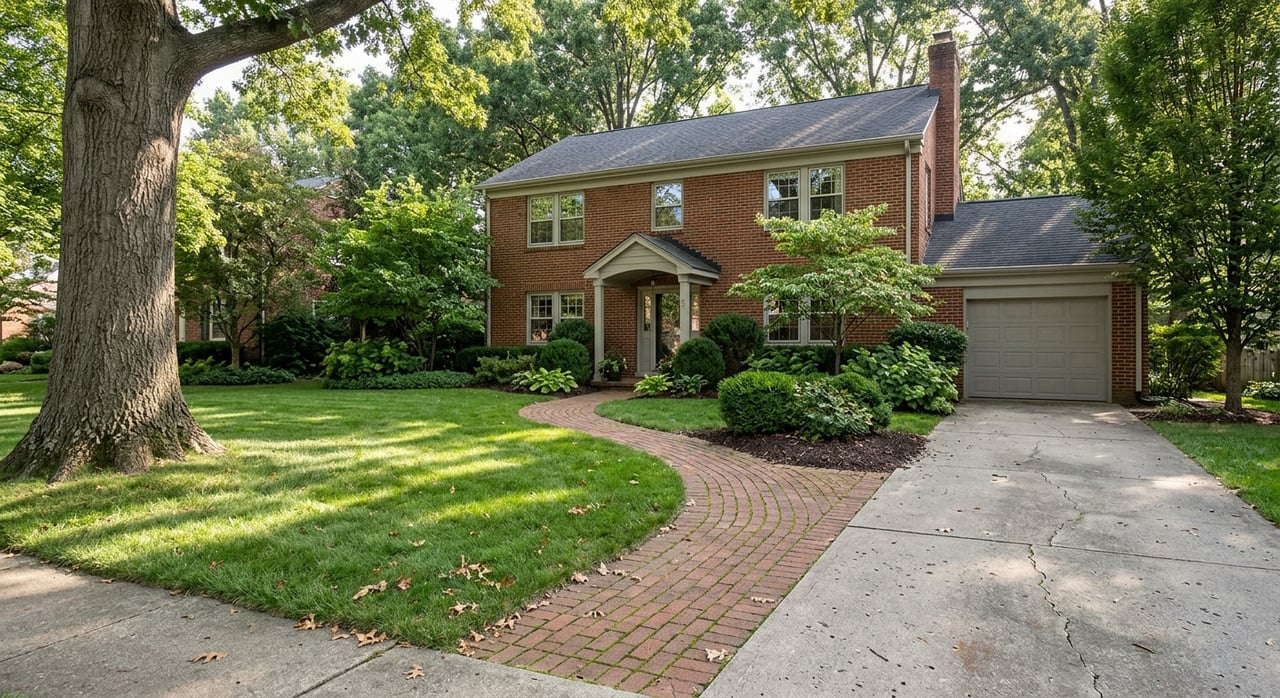
Looking for more space without feeling cut off from Louisville? Anchorage offers a rare mix of larger-feeling homesites, mature shade trees, and a quieter residential setting that stands apart from more typical suburban patterns. If you are trying to figure out what daily life here really feels like, this guide will walk you through the landscape, home styles, and practical details that matter before you buy. Let’s dive in.
Why Anchorage Feels Different
Anchorage is a very small city in eastern Jefferson County with a distinctly residential character. Official sources place the population in the mid-2,000s, and the Jefferson County PVA describes the city as having about 850 residences, along with a school, churches, and only a few businesses. That smaller scale shapes the pace of life in a way many buyers notice right away.
Instead of broad commercial corridors and tightly packed subdivisions, Anchorage is known for preserved residential streets and a park-like setting. Historic preservation materials note that the city was founded in the 1840s and later guided in part by an Olmsted Brothers plan. That planning influence helped create curved narrow roads, triangle intersections, stone bridges, and a softer streetscape that still defines the area today.
For you as a buyer, that means Anchorage often feels connected to Louisville while still reading as its own place. It is close to the metro area, but the streetscape and layout create a more settled, leafy, small-town atmosphere.
Acreage Appeal in Anchorage
When people talk about acreage in Anchorage, they are not always talking about a remote rural lifestyle. In many cases, the appeal is about room to breathe. Homes often sit with more visual spacing, more green space, and more mature landscaping than you might expect in newer developments.
The Jefferson County PVA describes Anchorage as a place where historic homes, country estates, and smaller homes sit side by side beneath oaks and magnolias. That mix gives the city a look that feels established rather than uniform. You are less likely to see the same house repeated over and over, and more likely to notice variety in architecture and lot presentation.
The city guidebook describes Anchorage as a “rural residential landscape-park.” That phrase helps explain the local appeal well. Open green space, curving streets, natural drainage features, shady lanes, and a more natural landscape style all contribute to the sense that properties have breathing room, even when they are not truly rural in the traditional sense.
Shade Trees Shape the Experience
In Anchorage, shade trees are not just a nice bonus. They are one of the defining parts of the city’s identity. Mature canopy trees help create the visual character that many buyers are drawn to, and they play a major role in how streets and homes feel from the curb.
Official local materials specifically mention canopies of oaks and magnolias, along with expansive green space and natural plantings. That established greenery softens the streetscape and gives many properties a more timeless look. If you value older trees, shaded yards, and a less manicured, more natural setting, Anchorage stands out for exactly those reasons.
This also affects how you experience the lot itself. A property here may feel more private, more layered, and more connected to the landscape than a newer lot with young trees and minimal screening.
Historic Character and Planning Matter
Anchorage’s appearance is not accidental. The city’s historic preservation materials make clear that landscape, streetscape, and architectural setting are all part of the community’s character. The Historic Preservation District was created by the city council in 1992, and the district boundaries were influenced by the 1916 Olmsted plan.
That history matters because it helps explain why Anchorage still feels cohesive despite having a mix of house sizes and styles. The city guidebook points to park-like design features, native or natural plantings, and preserved landscape elements as part of the overall setting. In other words, the look of the area has been intentionally protected over time.
For buyers, that can be a major plus. If you want a place where the landscape still feels established and the residential environment has not been completely reshaped by newer development patterns, Anchorage offers something unusual in the Louisville area.
What Homeowners Should Know About Trees
The same trees that make Anchorage attractive also come with responsibilities. Local preservation guidance says existing landscape elements should be maintained, and tree removal for trunks greater than three inches must be approved by the Anchorage Forestry Department. That means tree decisions are not always as simple as they might be in other communities.
The city’s consolidated ordinances go further for new construction and site changes. For new structures, the City Forester can require enough replacement planting to bring the site to an average of two trees per 5,000 square feet of lot size, with up to one-third of those trees required to be canopy species. Replacement trees must be planted within 12 months, and the city has a permit or notification process for tree removal.
If you are considering a home in Anchorage, this is worth understanding early. On a larger lot, tree placement and preservation may have a real impact on additions, exterior changes, or long-term landscaping plans.
What the Housing Mix Looks Like
One of Anchorage’s strengths is that it does not feel one-note. According to the Jefferson County PVA, you will find historic homes, country estates, and smaller homes within the same city. That creates a broader range of visual character than many buyers expect.
This variety can be appealing if you want a neighborhood with personality rather than a more uniform subdivision look. It also means your home search may involve very different property types, from homes with a long-established estate feel to smaller residences that still benefit from the same tree-lined setting.
From a practical standpoint, that makes local guidance especially helpful. In a place where architecture, lot layout, and preservation considerations vary from property to property, having a clear sense of your priorities can save you time.
School Boundaries Need Verification
Anchorage is also notable for having its own one-school independent district. School council materials confirm that Anchorage Public School serves grades K-8, with primary grades K-3, intermediate grades 4-5, and middle school grades 6-8. That self-contained structure is part of what makes the city feel distinct.
At the same time, buyers should not assume that every Anchorage address falls within that district. The district’s enrollment information states that boundaries are unique, may be difficult to determine from general maps, and that not all residences within the city of Anchorage are part of the school district. Families are instructed to verify a specific address with the Board of Education before buying or renting.
That is one of the most important practical steps you can take during your search. If school assignment is a major factor in your move, address-specific confirmation should happen early.
Who Anchorage Often Appeals To
Anchorage tends to appeal to buyers who want a more established residential setting with mature landscaping and less commercial clutter nearby. You may be drawn to it if you want larger-feeling lots, older trees, and a quieter daily environment while staying in the Louisville market.
It can also make sense if you value architectural variety and a setting that feels preserved rather than recently built out. The city’s low density, limited commercial activity, and park-like street pattern all support that experience.
For move-up buyers especially, Anchorage offers a different kind of space. It is not just about square footage. It is about the relationship between the house, the lot, the trees, and the street.
Smart Steps Before You Buy in Anchorage
Because Anchorage has a more distinct local character, it helps to do a little more homework upfront. A few early checks can give you much clearer expectations before you commit to a property.
Here are some of the most important things to review:
- Verify whether the specific address falls within the Anchorage Public School district if that matters to your move.
- Ask about historic district requirements that may affect exterior changes.
- Review any tree preservation rules tied to the lot.
- Look closely at how landscaping, drainage, and tree canopy affect the use of the property.
- Consider whether you want the feel of a smaller home in a leafy setting or a larger estate-style property with more land.
These steps are especially useful in a community where the landscape is such a major part of ownership. A home here is not just the structure itself. It is also the setting around it.
Why Anchorage Stands Out Near Louisville
Many Louisville-area buyers are looking for a balance between convenience and breathing room. Anchorage stands out because it offers that balance in a very specific way. You get proximity to the larger metro area, but the city’s scale, planning history, and tree canopy create a setting that feels more tucked away and residential.
That is what makes the phrase “acreage and shade trees” such a strong fit for life here. The appeal is not simply lot size on paper. It is the lived experience of green space, mature canopy, and a streetscape designed to feel calm and established.
If that is the kind of environment you want, Anchorage deserves a closer look. And if you want help comparing homes, verifying the details that matter, and finding the right fit in this part of Jefferson County, Weston Faulkner can help you navigate the search with practical local guidance.
FAQs
What is daily life in Anchorage, Kentucky like?
- Anchorage has a small-city, residential feel with about 850 residences, limited business activity, and a park-like streetscape shaped by historic planning and mature trees.
What does acreage mean in Anchorage real estate?
- In Anchorage, acreage often refers less to remote rural living and more to larger-feeling lots, more green space, mature landscaping, and greater spacing between homes.
Are shade trees protected in Anchorage, Kentucky?
- Yes. Local guidance says tree removal for trunks greater than three inches must be approved by the Anchorage Forestry Department, and city ordinances include tree preservation and replacement standards.
Do all Anchorage homes qualify for Anchorage Public School?
- No. The district states that not all residences within the city of Anchorage are part of the school district, so you should verify a specific address with the Board of Education before buying or renting.
What types of homes are found in Anchorage, Kentucky?
- Official local sources describe a mix of historic homes, country estates, and smaller homes, which gives Anchorage more architectural variety than a typical uniform subdivision.
What should buyers check before purchasing a home in Anchorage?
- Buyers should verify school district eligibility for the specific address and review any historic district or tree preservation requirements that could affect the property.